
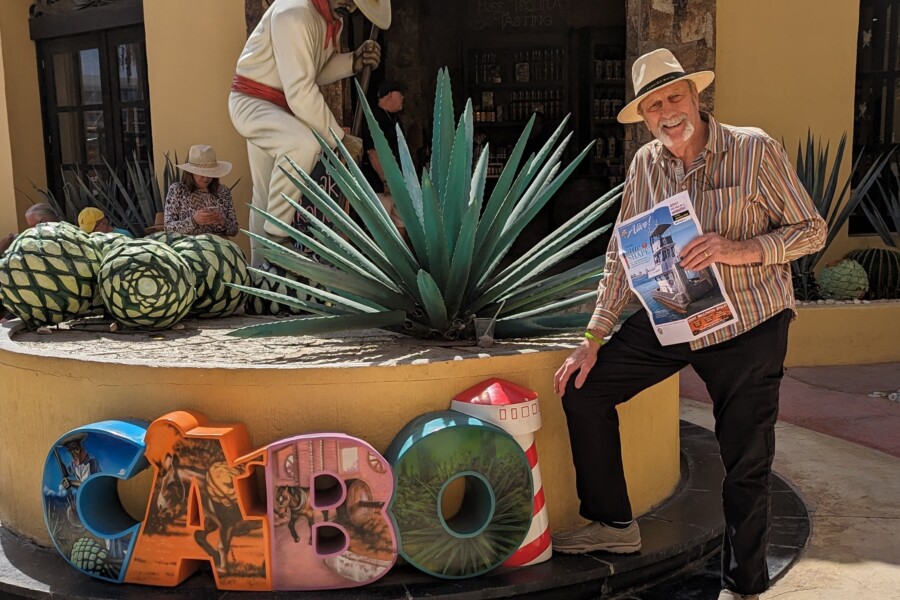
Many years ago while exploring the Baja Peninsula, I first encountered the small Mexican seaside town of Cabo San Lucas. It was nothing more than a few bars, a fish cannery and a ferry terminal to the Mainland of Mexico, along with a small marina with a fuel dock popular with yachts men and big game sports fishermen who had come to fish in the surrounding waters for striped marlin, dorado, and wahoo.

Its original inhabitants, the Pericú people, who lived here around 13,000 BC, have long gone, being replaced in turn by Spanish priests, English pirates, Hollywood movie stars, sports fishermen, cruise ship passengers and college students learning to drink. Unfortunately, Cabo has fallen victim to its own success, as thousands of cruise ship passengers arrive daily to explore the town’s souvenir shops, searching for the perfect trinket to take home. Many take the cruise ships’ shore excursions to local attractions like the natural Seacliff archway (called El Arco) at the Land’s End promontory, or to swim in the clear calm warm waters of the Sea of Cortez, near Playa del Amor (Lover’s Beach). With its circular lagoon, exotic birds and stunning marine life, ringed by family-friendly to adults-only hotels and resorts, it’s often called the “Galapagos of Mexico.” But be aware of the Pacific side (Divorce Beach), because it has dangerous currents and no lifeguards.
The town’s marina features numerous outdoor restaurants and bars overlooking small yachts and sports fishing boats for hire, located next to the warm waters of El Médano beach, a popular spot for water sports and daytime beach parties, especially when college students are on their yearly breaks.

At night, the town becomes alive and revelry never seems to end, as groups of lively young people move from bar to nightclub to bar, trying to consume vast amounts of cheap tequila and beer, while dancing the night away, often until 5 a.m. to very loud music. Cabo is generally safe; the most common problems for tourists include scams, theft of unattended items, and poor decisions made after a long night partying. Violent crime is rare and often occurs when individuals find themselves in the wrong place at the wrong time.
The countryside around Cabo has become a major luxury tourist destination, with the construction of high-rise condominiums and elite hotels popping up like mushrooms to cater to wealthy American and Mexican tourists. These tourists seek relaxing or exclusive vacations and the high end hotels provide for those with a more open pocketbook. They include places like the luxury resort of Esperanda, with its excellent views, food, and uncrowded beaches. Or fine dining at Torote by Valle del Sol, which serves extraordinary food to well-dressed clients.

What are the don’ts in Cabo? Don’t buy or do drugs. Don’t get too inebriated and then walk on the beach or wander around dark streets at night. Don’t go to shady looking dive bars, or worse.
Most people who encounter trouble in Mexico often seek it out.
The best month to visit Cabo is this month, December, with its warm temperatures, minimal rainfall, and excellent whale-watching opportunities. However, it is very crowded until April.
May and June, as well as October and November, offer good weather with fewer crowds.
Try to avoid August and September, as this is the peak of hurricane season. Sweltering heat, tropical storms, heavy rain, and rough seas are not uncommon during that time.
Have fun; it’s only a short flight away.
— El Capitán