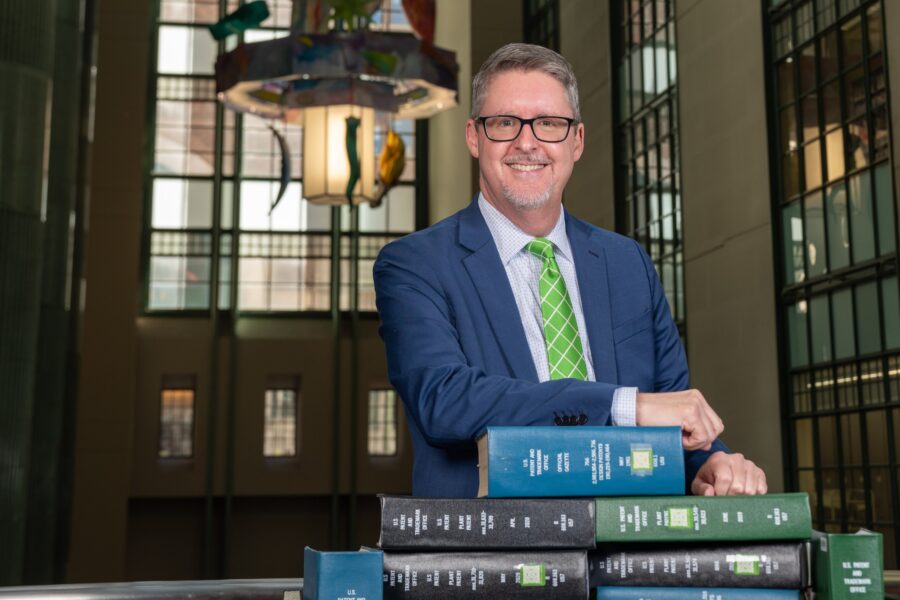

ABOUT JOHN F. SZABO
John F. Szabo is the City Librarian of the Los Angeles Public Library, which serves more than four million people—the largest population of any public library in the United States. He oversees the Central Library and 72 branches. In 2015, the Library received the nation’s highest honor for library service, the National Medal for Museum and Library Service, for its success in meeting the needs of Angelenos and providing a level of social, educational and cultural services unmatched by any other public institution in the City.
Under his leadership, the Library’s major initiatives include those related to immigrant integration and citizenship, improving financial literacy and providing health resources and programs. He has expanded the Library’s reach into the City’s diverse communities through partnerships with several community-based organizations.
Szabo received his Master’s Degree in information and library studies at University of Michigan and his Bachelor’s Degree in telecommunications from University of Alabama. He completed the Senior Executives in State and Local Government program at Harvard University’s John F. Kennedy School of Government. He also participated in a Group Study Exchange with Rotary International, visiting libraries and archives in Sicily and the Aeolian Islands.
He serves as Chair of the Board of Trustees of OCLC, a global library cooperative. He also serves on an advisory board for the University of Southern California Center for Library Leadership and Management. He has previously served on the boards of California Humanities and the Urban Libraries Council and as president of the Florida Library Association.

ABOUT THE CENTRAL LIBRARY
The flagship Central Library is the headquarters for the Los Angeles Public Library, which includes 72 branch libraries. The third largest central library in the nation, its subject departments contain more than 2.8 million books, 5,000 magazine subscriptions, more than 3 million photographs, 10 million digital access U.S. patents, plus language learning and multi-media materials.
The building opened in 1926 to rave reviews and has been welcoming Angelenos and visitors for a century. Hailed as an architectural gem, the building is renowned for such iconic features as the tiled pyramid on the roof; the vast, mural-lined Rotunda; and its more modern Atrium wing, which opened in 1993 after a devastating fire in 1986.
The building features 538,000 square feet of space on eight floors, nearly 89 miles of shelves, and seating for more than 1,400 people. There are 255 free public access computers located in the Computer Center and throughout the building. Internet access is also provided by Wi-fi.

As historic Central Library turns 100, City Librarian John F. Szabo, Club Member, takes the national stage.
Alive! kicks off the New Year with two stars in the spotlight – one of downtown’s most prominent buildings, and one of the City’s most prominent employees.
This month, the Los Angeles Public Library begins a year-long celebration of Central Library’s 100th anniversary, noting the innovations, cultural moments, disasters and triumphs it has witnessed, and positioning it for a future of continued service.
Meanwhile, popular City Librarian John F. Szabo, Club Member, has arrived on the national (and international) stage, having won last year’s Librarian of the Year from industry periodical Library Journal, and the Freedom of Information Award from the Society of Professional Journalists’ Southern California chapter.

Fiercely LA
On Dec. 2, Club CEO Robert Larios and Alive! editor John Burnes interviewed John F. Szabo, City Librarian, Los Angeles Public Library, 13 years of City service and avid Club Member. The interview took place via Zoom.
Alive!: Thanks for joining us today, John. I bet the holidays are busy at the LAPL.
Absolutely. It’s a busy time of year for us, although all times of the year are.
We so much appreciate you sitting down and speaking to us about what you have planned for the Central Library’s centennial, and why libraries are more important than ever.
John F. Szabo: Thank you so much for doing this; this is just wonderful for the Library and all the fantastic City Employees who work at the Library. Alive! has lifted up the City staff in so many wonderful ways. That includes the Library, and we appreciate it.
You’re welcome. Let’s start with this: Can you summarize your career path from Alabama to Georgia, Michigan, Illinois and out here to Los Angeles?
Sure. My father was an Air Force Officer, and he met my mother in Alabama. She was from Alabama; he was a son of Hungarian immigrants from Cleveland. We moved a bit with the Air Force. When I was fairly young, he retired, and I grew up mostly in Montgomery, Alabama. My first job was working at a small library when I was 16. And while I immediately did not say, “Oh, I want to become a librarian, and this is my career path,” I really loved it; I loved the sense of happenstance with collections in the library. I found what happened behind the desk as exciting as many kids find what an astronaut or doctor does. The idea of being on the other side of that desk, knowing what was happening and figuring out how all that worked was just incredibly exciting to me. So I got a job making $3.15 an hour in that little library. It was a part-time job, and I continued it in high school and then went to college at the University of Alabama. Then I got a student position in an interlibrary loan office at the university library.
I got a little experience in the academic environment and helped faculty members get materials from other institutions around the world. I also worked part-time at a public library there, but still I was not on track to be a librarian. I was a communications major and actually was going into television as a career. I was offered a job at the CBS affiliate in Tuscaloosa that doesn’t exist anymore.

In front of or behind the camera?
A little bit of both, but it was to be in front of the camera for that particular position. I remember telling the person who reached out to me, “Well, I’m going to library school at the University of Michigan.” That was my fork in the road. The University of Michigan had this very unique and rare program: All of their residence halls had small libraries in them. They had a program that placed 13 students studying in the Master’s program in information library studies as head librarians of these itty-bitty libraries. I got a stipend, room and board, and a position on the residence hall staff just like resident advisers and resident directors. I got to work with and hire undergraduates to work in the small library. I got experience supervising, managing a budget, developing the collection, cataloging materials, and programming. It was like a public library within a dormitory.
I loved that job. I earned my Master’s and decided to focus on public libraries. In my early 20s, on a lark, I applied to be the director of a rural library in Robinson, a Southern Illinois town of 8,000 people in the middle of corn and soybeans. I feel so fortunate to this day that that library board hired me. They took a risk on someone very, very young, a person who’d never been in Southern Illinois. I could have hated it and left after two months for all they knew. They hired me, and I was there for three and a half years. I absolutely loved it. I loved being the library guy in town. I joined the Chamber of Commerce; I was a member of the Elks Lodge; I participated in civic life in that small town and learned how important and valuable the public library was to rural communities.
I knew I wouldn’t be there forever, and it was very difficult to leave, but I became Library Director in Palm Harbor, Florida, for three years. Then Clearwater for about seven, which was a small city of about 125,000 that had five libraries. And then I made a big jump and became Director of the Atlanta-Fulton Public Library, which includes all of the city of Atlanta and 14 other municipalities. I was Library Director there for seven years.
I never thought I’d be west of the Mississippi River, and certainly not all the way to the West Coast and California. I couldn’t imagine myself in Los Angeles. But I looked at the job here in L.A. and thought, “I think it’s a good match” with the work I’d done in Atlanta around public health and multilingual services and services to immigrant communities. I came in under Mayor Antonio Villaraigosa, and it was a fantastic match. I love L.A. I still can’t believe I’m a Californian and an Angeleno, but I’ve really embraced it. Fortunately, L.A. has embraced me, and it’s a wonderful place to be a library leader.
Did you go to the library often while growing up?
My dad would drop me off at the library frequently. I just loved it. My curiosity could be satiated by looking in any direction and finding things that I wasn’t looking for or didn’t know I was going to be interested in but was. I also saw that the library did things that appealed to a very diverse group of people. That sent an early message to me about who library people were, who librarians were, and what the profession of working in libraries was all about—that library people were my people.

Celebrating a Century
It’s the 100th anniversary of the LA Public Library’s Central Library. Happy anniversary, of course. What do you have planned to celebrate?
Oh my goodness. The Central Library was built in 1926. The institution has been around since 1872. Not many institutions in LA have been around that long; we really are proud of that. The Central Library bounced around all those years before 1926 in department stores and City Hall and other buildings, but eventually it made its way to this amazing building.
We have so many things planned. Our staff has done an out- standing job planning for it. They formed a Centennial Committee, and we’ll have five different exhibitions throughout the year. We have a pop-up traveling exhibit talking about the history of Central Library that will go to various branch libraries. We’re going to be publishing two books through our publishing business, Angel City Press. One is an “ABC” book about Central Library. It was a fascinating internal discussion about what “G” and “X” should stand for. A wonderful children’s book illustrator is creating the art.
We’re also going to have a pop-up book about Central Library, which is quite exciting. We’ll have a reading challenge during the year. We have a lot of digital content of reading lists from 1926 and things that will speak to the history of the Library. We’ll offer a new self-guided tour of the Central Library for visitors. Of course, we also have an online virtual tour of Central Library as well. Both are in addition to docent-guided tours offered several days a week.
We’re going to have a special-edition Library card; whenever the Library does a special edition card, they’re wildly popular. We did one with Shepard Fairey a few years ago, and another by Gajin Fujita, an amazing artist. We did [the deceased mountain lion] P-22; that was very, very popular. This one undoubtedly will be popular too, so we’re looking forward to that and so many other things.

Celebrating Milestones
Are you going to be highlighting overall Library milestones?
Sure. We’ll also highlight the development of our branch libraries. The Central Library is the crown jewel, the centerpiece of the LA Public Library. It is not only a branch library for Downtown, but it is a library that belongs to everyone from San Pedro to Porter Ranch and from El Sereno to Pacific Palisades. But the branch expansion is certainly important as it broadened the level of service to Los Angeles. And all of those libraries rely on Central Library, Central Library staff, and Central Library collections, as well.
Library staff, and Central Library collections, as well. We’ll highlight the 1986 fire that nearly destroyed the Central Library, but also, incredibly importantly, the commitment to libraries and the commitment to preserving the 1926 building after the fire. There were con- versations in the 1970s about knocking the building down and not preserving it, and building a new Central Library in a different part of the City. The wisdom of library advocates and City leaders to keep this architectural jewel will be highlighted. It’s an incredible asset to Downtown and to everyone who visits, works or lives there.
The amazing Tom Bradley Wing, designed by Hardy Holzman Pfeiffer’s Norman Pfeiffer, came out of that. All of the outstanding public art inside and outside the building is a really incredible thing to celebrate.
And then, we’ve acquired many new collections that have enhanced our photo collection, which is pushing four million photos now. The creation of the Digitization Lab – where we actively take that content, which at its core is the history of Los Angeles, and digitize it and make it searchable and discover- able to people throughout California and all over the world – is hugely important. At the end of the day, that’s what the Public Library is about. We are about access and making certain that access is equitable, and that we’re amplifying the history of L.A. and the fabulousness of Los Angeles and Southern California. The Digitization Lab is a large part of that.
We’ll also be highlighting the evolution of the Library system, including here at Central Library, through technology. For more than 30 years, libraries have been about digital equity and digital access. It started with taking big, bulky PCs and plugging them into the wall and saying, “These are free for you to use, patrons.” That led to Wi-Fi and free internet access and printing, and then to loaning out laptops and mobile Wi-Fi hotspots and helping people with digital literacy skills and helping people use the computers, including how to download an e-book onto your phone or e-book reader. The evolution of technology has been a big part of this building’s history. A great example of that is the Octavia Lab, which I know you featured in Alive! That’s digital equity and access as well. People who wouldn’t have access to a podcasting studio or an embroidery machine or a digital sewing machine or a laser cutter or 3D printing, have freely available access to that equipment. It’s there for entrepreneurs and high school students and Angelenos from all parts of the City free of charge. That’s really wonderful as well and an important deliverable.
We’ll also activate our exhibit spaces to showcase our own collections and the history of L.A., but we also feature other exhibitions that we curate and put together or from other institutions. There have been many exhibitions over the years, and it’s exciting to think about where we go from here as well.

Evolution
Since Central Library opened, the City of L.A. has grown enormously – not just in size, but in capability as it came on to the world stage. How has the Central facility kept pace and mirrored the growth of the larger City?
By making certain that the kind of programming offered here – the exhibitions, the children’s activities, the technology – are responding to the needs of the community. I am a huge believer in that, whether it’s Central Library or our branches, and also thinking about the Los Angeles Public Library as an institution. It is critical for us to be a great and relevant Library, an important Library, not just as a nice-to-do, but as an absolute must-do service of the City of L.A. We have to connect what we do to the biggest issues that our City faces. The Library does a great job of that. A traditional definition of a library can be static; some people think of us that way. But in fact, libraries are much nimbler than a lot of people give us credit for. We evolve to meet the needs of the communities we serve.
I think about the Library as a workforce and economic development institution. We are an immigration services organization. We are about financial literacy and public health information, and even providing public health services. It’s very, very broad. The Library has evolved to provide those services. You can see that reflected in not only the things that are on our shelves, but the technology and services that we have. Through the years, we’ve become much stronger and savvier at going beyond the walls of the Library and having our outreach teams tell people what the Library can help them do. That is incredibly important, to do that in a culturally-competent way that’s mindful of language access and needs. We have a Spanish-English bilingual outreach team, for example, to let people know what we’re doing.
We’ve also done cultural festivals here at Central Library. It’s the only part of our system where we can have 5,000 people come. That’s how many people come to the LA Libros Festival or the June Jubilee: A Celebration of Black Excellence or the AAPI Joy Festival.
We can’t forget about the Book Bike either, literally taking your messages out to the road.
I love the Book Bike!

The Library of LA
How is it L.A,’s Library? You’re going to have significant commonalities with the New York Public Library, or even those in smaller cities. But how is the LAPL defined by the City in which it resides? How can this only be Los Angeles’ public Library?
That’s such a great question. Libraries certainly have commonalities. They might be different all across the globe. But I will tell you, if I’m in Guangzhou, China, and talking to the Library Director there, it feels like we share DNA. There is this shared sense of service and values across public libraries, which is absolutely amazing and makes me so thankful to be in this profession.
But with that said, we are such an L.A. Library – fiercely L.A. and fiercely intent on making certain that L.A.-ness is reflected in what we do and who we are. We do exhibits here that I don’t think are done anywhere else. We offer programming that’s incredibly creative and that celebrates Los Angeles. Celebrating L.A. is part of our current strategic plan and priori- ty, and it’s certainly a goal of the Library. We do that by collecting photographs and restaurant menus and other things that tell the L.A. story. But the thing that I think really makes us L.A is that – and this is the fifth public library I’ve directed – I have never been anywhere where the most outlandish, creative idea from me or a staff person is proposed, and almost all the time, people say, “Yeah, oh my gosh, of course we should do that.” For example, helping undocumented immigrants get their driver’s licenses after AB 60 passed the State Assembly. At the L.A. Public Library, no one says, “Oh no, that’s outside of your lane, John.” Or having blood pressure screenings at the Library. Or teaching people Farsi, or introducing a Book Bike. And now, of course, libraries all over the country have Book Bikes. A lot of libraries have been doing great things for some time, but I’d like to think we helped to start that in L.A. We often try things at the L.A. Public Library because L.A. is about discovery, newness and invention. We’re able to do things here at the L.A. Public Library that haven’t been done elsewhere. And then they can get replicated at other libraries. That’s a uniquely L.A. quality about the L.A. Public Library.
There’s a sense in L.A. of having the courage to be creative and to try new things. The LAPL does that very well.
Thank you. We’re very proud of that.

The LAPL in the Modern World
Arguably, anyone questioning the relevance of libraries today has never really stepped inside one. What is the role of a library in our modern world?
We remain at our core a learning institution. Learning hap- pens with people discovering things on a shelf. It happens that way every day. But there are things libraries do in the learning space that are much more intentional and formal. I’m thinking about our Career Online High School, where adults who didn’t get their high school diploma when they were teenagers can come back and get that high school diploma whether they’re in their 20s, 30s, 40s, 50s or 60s.
But I think we’re also a cultural organization, an arts organization. We preserve a community’s history. We want to help people find jobs and succeed, and we want to have a real impact on people’s lives. We want to make certain that we’re welcoming everyone and that we’re serving absolutely everybody in the community. Unlike all sorts of other incredible institutions in a community, be it colleges and universities or the school district or private schools or hospitals or the healthcare industry, we really are serving absolutely everybody.
We think about infants and helping parents develop a connection to books and a lifelong love of reading among young people, starting at birth. We think about the oldest in our community. We think about shut-ins. We think about people who have difficulty availing themselves of City services and library services because of language, and how we can do a better job of helping them. The Library is that “everybody” institution.
I hope that people will leave the Library with some level of excitement about the Library being a very different institution than a traditional definition would dictate, that libraries are doing so many other things now. If you learn a little bit about the LA Public Library, you will discover that there is something we’re doing that you did not know that we did. And that’s special. People who have never been to the Library are important to us as well. I believe that even if you’re not a regular library user, be it online or in person, you still should be a Library advocate and understand that the Library plays a very valuable role in the community. That’s a really important point to make – there are things that the Library does broadly for the overall community that should be important to people, even if they’re not making use of any of our services.
You’ve mentioned many of the services provided by the Library that might surprise people. What are some of the others?
The Central Library is very much an academic library as well. It’s like a college or university library. Public libraries often have been described as The People’s University. That’s the tagline of the Cleveland Public Library. We have research materials here. If you’re looking for a photograph from 1961 of Reseda Boulevard or the community of Panorama City or Watts, likely we have that photo. We have 18,000 restaurant menus in our collection. In our West Valley libraries, we have birding back- packs where you can check out a backpack that has a set of binoculars in it, a book about all different bird species, and a little booklet where you can take notes about what birds you’ve seen. The sets were provided through a partnership with the San Fernando Valley Audubon Society.
Often people will say, “The Library is the best-kept secret; I had no idea you did that.” I hate that. But I appreciate it at the same time because there are about a thousand public pro- grams a month that happen in our libraries. There are things happening at our branch libraries and here in Central Library that even I don’t know about. We do target marketing. It is a beautiful thing that there are creative, wonderful things that our incredible staff is doing that are well-attended, heavily utilized.
Are you still loaning out ukuleles?
Yes! A wonderful librarian named Marc Horton at the Wilmington Branch started that. We wound up having the instruments at many of our branch libraries. One of the great memories I have is at a staff holiday gathering at Central Library – a group of librarians got together as a ukulele orchestra and performed a song. It was amazing.

Personal Connection
What’s your favorite room at Central Library? Where’s the place you like to go to reconnect with your love of libraries?
I love all of our libraries and every square inch of our footprint across L.A., but I consider myself very fortunate that my office where I come each day is in a library. There are library systems that don’t have a Central Library, or their administrative offices are in an office building somewhere in the city or county. But I am in a library.
The space that I particularly love coming to that reminds me of why this work is important, is our children’s area here at Central Library. There’s nothing better than watching kindergarteners come on a field trip holding hands with one teacher in front and another in the back as they come in for a story time or a craft program. As I’m giving a tour of the building, I love walking through our children’s literature department, a grand space that is awe-inspiring. And in the Children’s Picture Book
Room, there’s a smaller space with a lower ceiling where inevitably at any time of day you will find parents or grandparents with one or two children simply sitting there together as a family reading books and experiencing the library in their own sort of personal way. Seeing that happen is very heartwarming and a reminder that providing that space for people is a special privilege. How fabulous it is to offer that in this amazing 100-year-old building – you can look in any direction and be inspired and in awe.
I remember leaving my interview at City Hall for this job. I was staying at a hotel in Little Tokyo. I went back, changed into jeans, and walked through Downtown and came back to Central Library. They didn’t know who I was. I remember consistently encountering, “Oh, my goodness, that’s really interesting,” or “Look at that chandelier,” or “Look at that mural,” or “Look at that space,” or, “Look at that architectural detail,” or “Look how grand the space is.” The Central Library is a magnificent public space. I remember being at the base of the water- fall of escalators in the Tom Bradley Atrium and looking up at the grandness of that space and the colorful Therman Statom chandeliers, and being so inspired and saying, “I really want to work here. I really want this job. I hope I get this job.” To this day, even after the years I’ve worked here and the hundreds of tours I’ve given, I still see things I’ve not noticed before. It’s a place of constant discovery. It continues to reveal itself over time.

The Future
Where is the LA Public Library headed? What does its future hold?
Our future is very bright because we’re building on decades of incredible service by amazing people who’ve worked here over the years. The number one reason why Measure L passed in 2011 was because of the hard work of a lot of people who campaigned for it, and also because the people of L.A. received incredible service from the library staff working in our system. We like to think we have our fingers on the pulse of what the needs in L.A. are, what the big issues are, and that we make certain our Library services respond to that. We make sure we’re stepping into issues and technology, and they aren’t things we resist. We continue to collect in new ways – I’m a big believer that our archiving and collecting of traditional materials and formats is an enormously important part of what we do. It’s what it means to be a memory keeper and a preserver of L.A.’s history. I always want to acquire more about the history of L.A. because I believe we are going to be here for decades and decades to come. We are permanent. Connecting with the history of the City is only going to become more important as we move ahead, and the Library plays a vital role in that.

Accolades
You’re racking up a lot of awards recently. Early in 2025, Library Journal named you Librarian of the Year. The L.A. Chapter of the Society of Professional Journalists gave you the Freedom of Information Award at the end of the year. First, congratulations.
Thank you. I’m very fortunate to be working in a profession that I absolutely love and that I’m more passionate about and excited about than ever. And to be recognized for that work is very humbling.
Why are accolades important? How do they reflect the quality of what the City of L.A. and the L.A. Public Library have to offer?
Those are awards for the people with whom I work who make all the incredible things happen in the L.A. Public Library. They are also largely connected to the values of librarianship and the values of libraries and what we stand for. As I’ve shared with our staff, they should take pride in these awards too, because our staff is at the core of them; they are committed to all those innovations and making them blossom. It’s a wonderful thing for the L.A. Public Library, and they help us push forward.
Passion
What is it that you truly love about what you do, John?
I love the mission. I love library people. I love talking about libraries and why libraries are important. And I love being an ambassador for library land. When I’m in a room of General Managers in the City of L.A., I love being the Library Guy. When I’m in any environment, I love, “Oh, you’re the librarian” or, “the library person.” I welcome that, I love that. Unlike for the other four libraries I’ve directed, the word Librarian is in the title. It’s about seeing the impact. I’m really proud of how librarians are good stewards of public and private dollars. You give a children’s librarian $100, and they will change lives.
We have to ask: What’s your favorite Club benefit?
The merchandise is amazing, and I continue discovering examples of it around. But also, I think the way you lift up the work of City employees, because that’s what it’s all about. Employees are our greatest City asset; it’s not the building, honestly, or in our case it’s not the books on the shelves. It’s not the sanitation trucks or the police cars, it’s the people who make it happen. And lifting them up and recognizing them for their work, and doing so in a really visually wonderful and genuine way, and celebrating that is not a nice “to do,” either. It is essential; it’s really important. There’s not enough of it. To me, that’s the best thing.
We agree. We love supporting the Los Angeles Public Library.
Thanks. All of the things that people associate with libraries, all of the traditional things story times, wandering along a shelf and pulling a novel down, being able to read a magazine or a newspaper or to do research or finding a quiet place to study – we do all of those things, and we do them incredibly well. The L.A. Public Library is such a forward-thinking, creative, innovative institution that we also find ourselves talking about podcasting studios; 3D printing; Tessa, our digital portal; our exhibitions; and more, but the core of what we do is lifelong learning and helping people with literacy skills so they can discover new worlds. The Public Library opens windows to possibilities – a child may never have known that becoming a marine biologist was something they could do, until reading a book. That’s done through discovery, through reading, through picture books and chapter books and all of that. The LA Public Library is doing that well.
Thank you for your time today, John.
Thank you so much. It’s been an absolute pleasure.