The Kawagoe Matsuri Festival is a unique event that takes place the same way as big festivals were held in the Edo Period (1603-1868) in Japan.
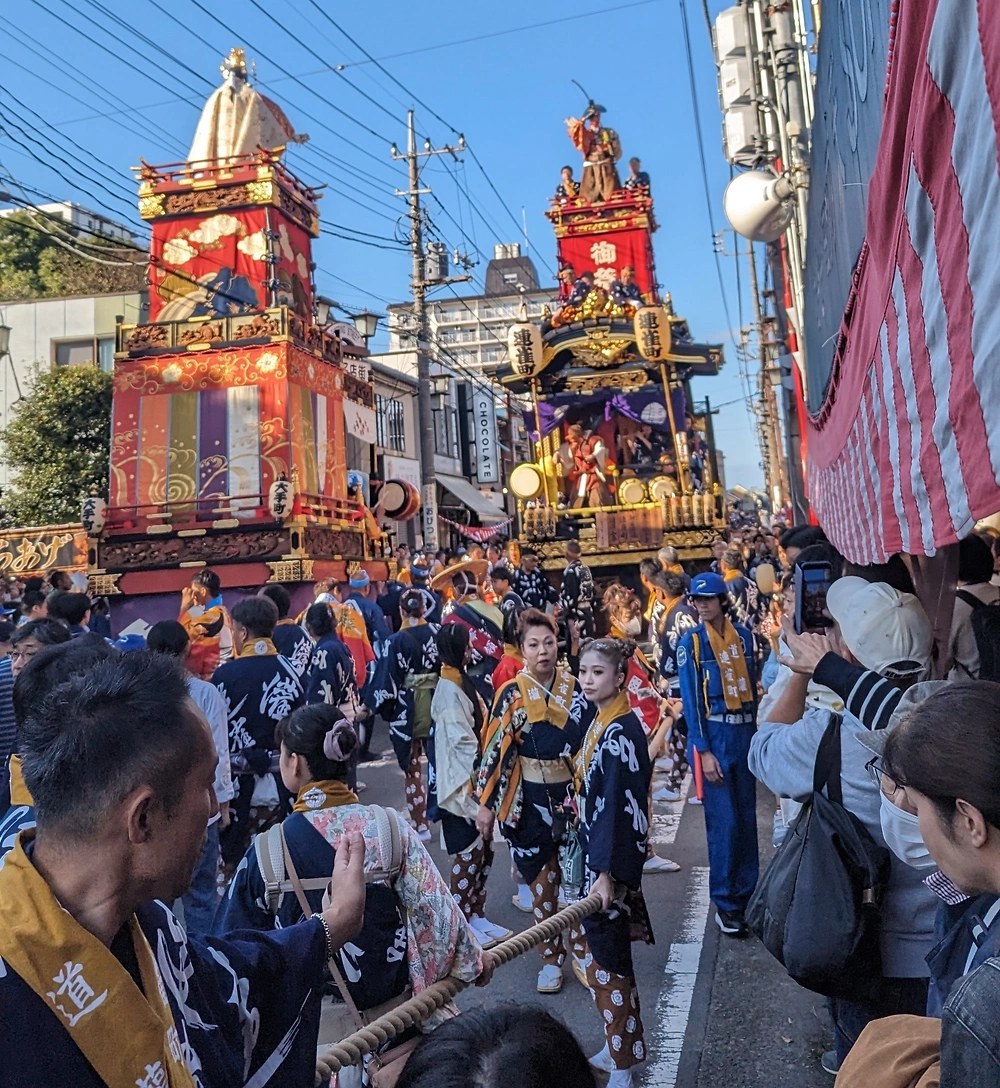
It is held over two days every year on the third Saturday and Sunday of October, when the historic town transforms into a lively celebration of Edo-period culture. It features up to 20 massive, elaborately decorated wooden floats called dashi, with dolls on top, that parade through Kawagoe’s historic “Little Edo” Kurazukuri warehouse district. After dark, floats gather at intersections to engage in energetic musical battles using flutes, drums, and hanging paper lanterns in a sort of face-off between the floats to see which is best at traditional hayashi music.
These two-story floats are built on a four- or three-wheeled base platform; the first level has musicians playing drums and flutes, and a traditionally dressed doll protrudes from the upper level; each tower has a trapdoor-style elevator. Originally, this device was created to allow the upper parts of the towers to retract when passing through castle gates. Still, today it’s the overhead telephone and electric power lines along the main street that must be avoided. There is no mechanical propulsion, so 50 or more identically dressed team members move the tower by pulling it with two very long ropes. To maneuver corners and turns, strong team members use large levers to manipulate the tower, as it has no steering device.
If your time is limited, visit the festival on Sunday around 9 in the morning for photos. The only people in the streets at this time are festival stall owners bustling to get the food ready for the day, so make your way from the train station; it’s about a 13- to 15-minute walk to the historic old town and the Kawagoe City Hall, where your adventure will begin. There is absolutely no charge, and it’s nearly free of foreign tourists. Still, thousands of local people will fill the streets to enjoy the festival and check out the shops and stalls lining it, all covered in long decorative banners called kōhaku-maku (red and white curtains).
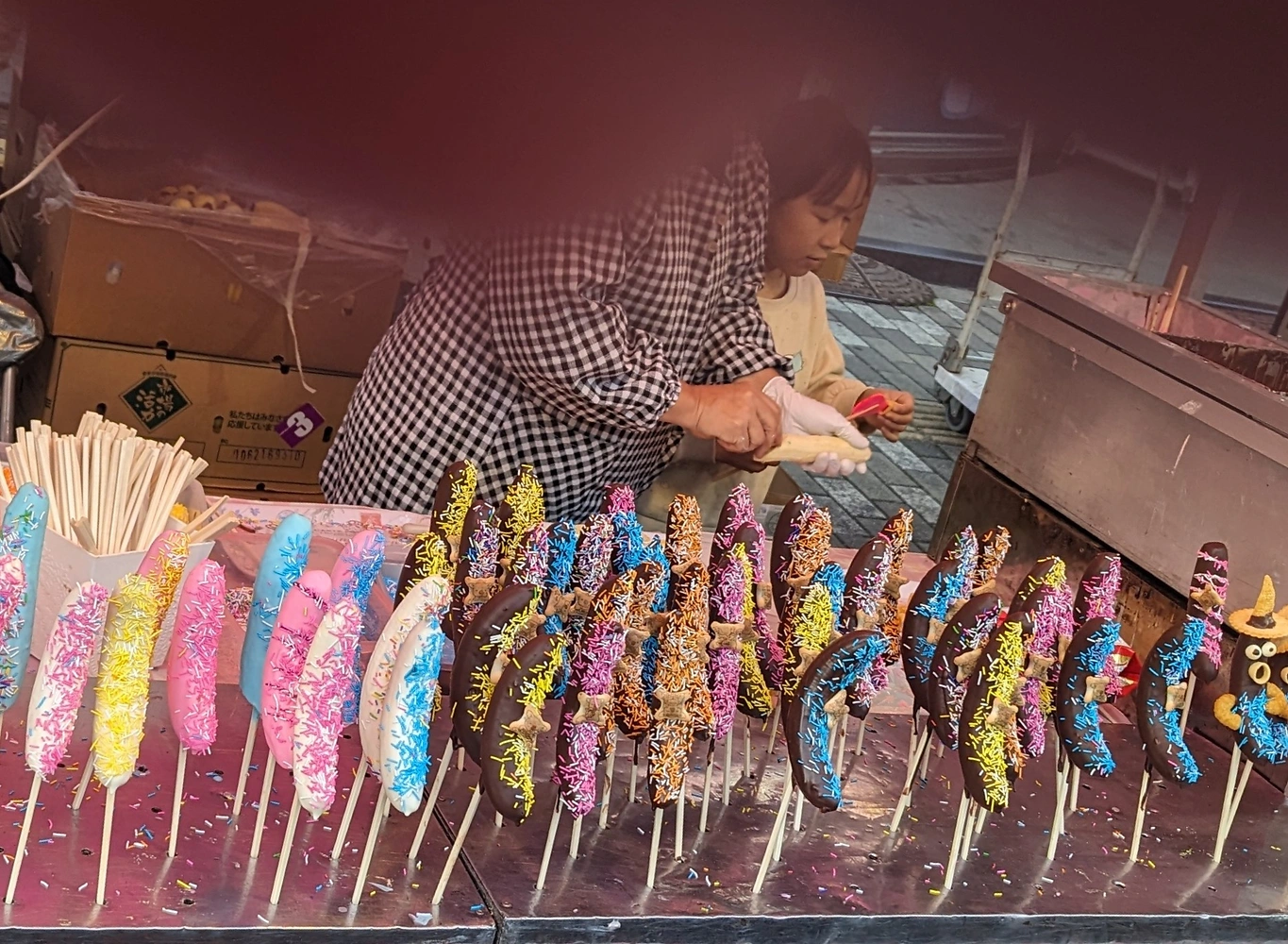
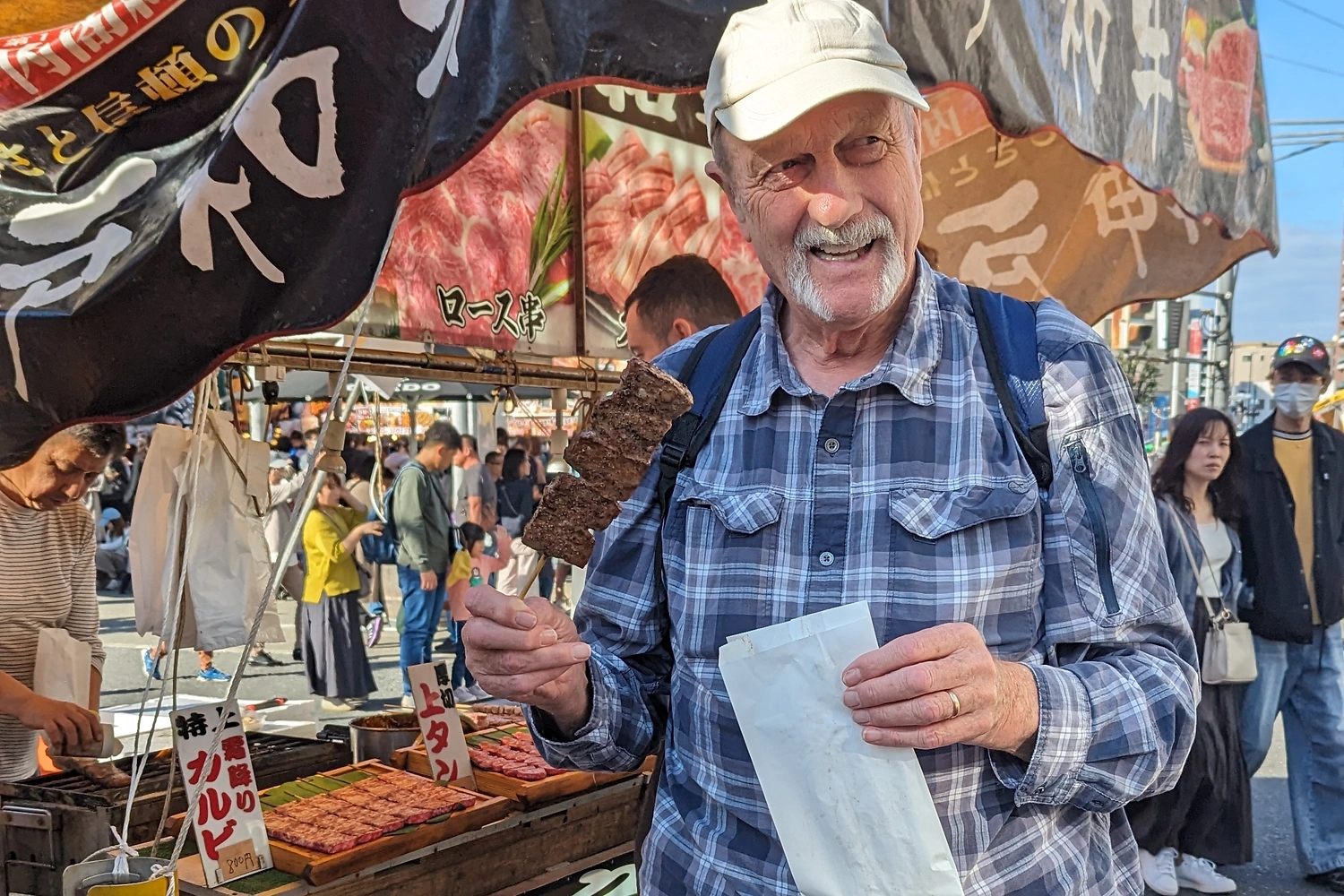
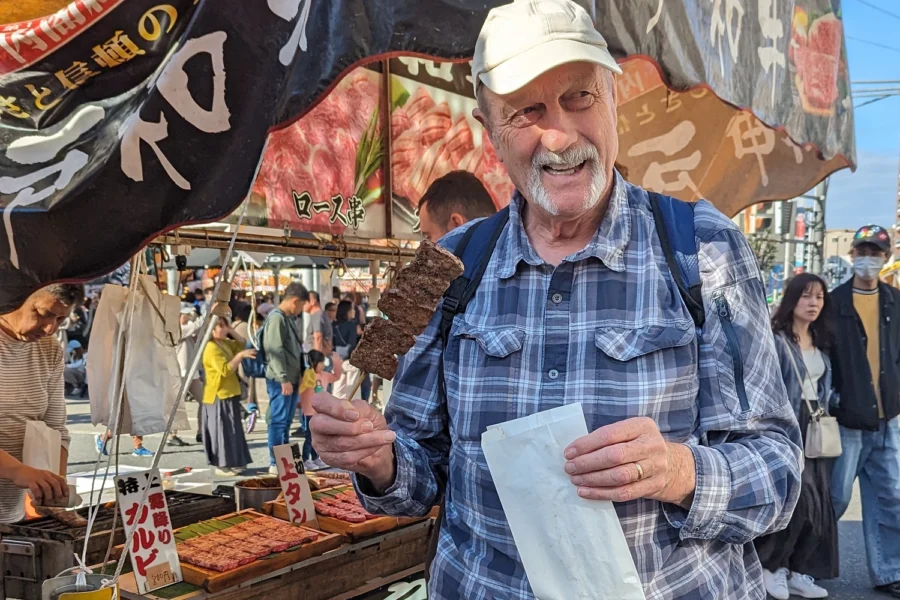
The variety of food is amazing; it seems like there’s something for everyone on a stick, from Kobe beef, butterflied chicken, prawns, calamari, and decorated bananas to ice-cold cucumbers, which are really refreshing and sugar-free. There is even a complicated-looking device that prepares fresh, roasted hot chestnuts, and of course there are the traditional candy streets, with their sweet potato (satsumaimo) treats like imokoi (a steamed bun with sweet potato and red bean paste), or daigakuimo (glazed sweet potatoes).
For the more adventurous, there is fresh river eel grilled in a traditional savory soy-based sauce.
This is a great opportunity to try something new and traditional.
It’s well worth the visit if you are in the area.
Itterasshai —The Captain