
The fish just couldn’t wait any longer.
Cabrillo Marine Aquarium is back after a big renovation that gives it, in its own words, the best aquarium seawater in the world.
That matters for the thousands of sea animals it caretakes … for critically important conservation … for its important teaching mission … and for its very future.
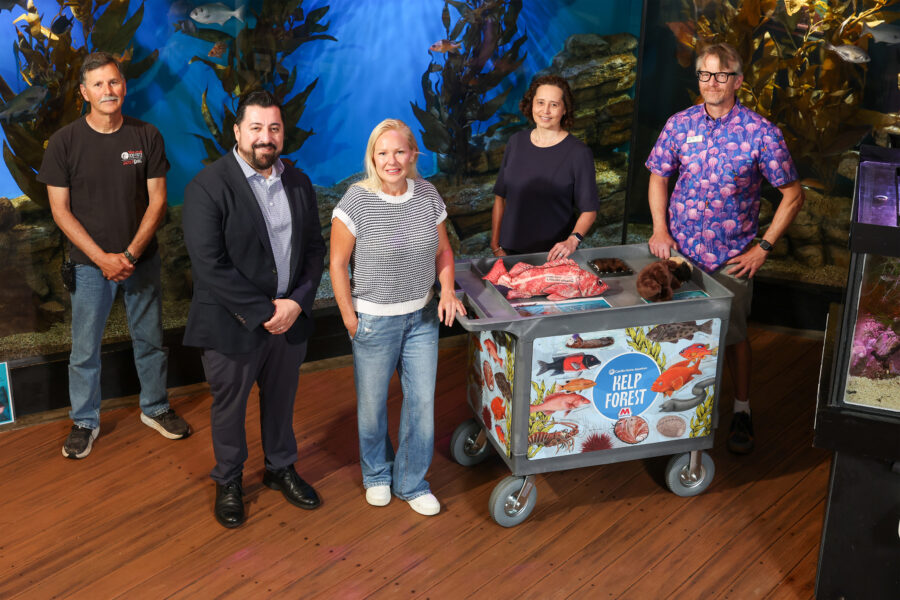
On April 18, the City-owned aquarium reopened after an 18-month partial closure with several new features meant to be visible to guests, including a renovated Susanne Lawrenz-Miller Exhibit Hall;
a Collections Room; a Jelly Lab, which supplies jellyfish to institutions throughout California; a Wayfinding Exhibit; bilingual signage, and more.
But the star of the show is what most guests will never see –
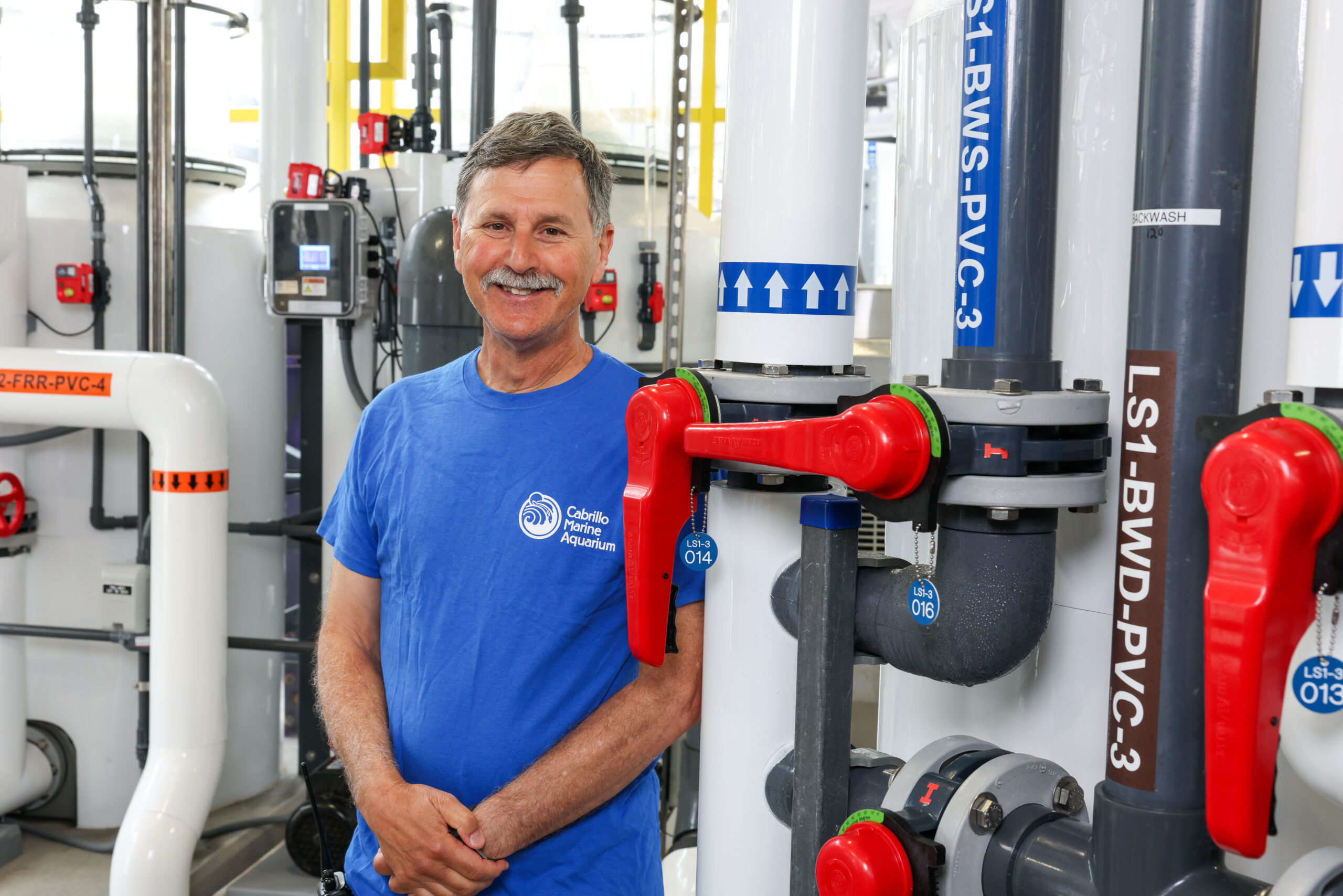
a state-of-the-art seawater life support system that pulls seawater from the nearby Pacific Ocean, filters it and adjusts its temperature, and then creates a fully redundant second system that can launch in seconds in case something befalls the first one. “The system gives us the best water possible at an aquarium in the world,”
says Chief Aquarist Jeff Landesman in this month’s Alive! interview. (Jeff is set to retire in late July.)
The cost of all the new features totaled $7.9 million. The cost of the seawater life support system formed the bulk of that total – $7.6 million.
Funding came from a number of sources, including Rec and Parks, the Port of LA, federal grants, and aquarium partner Friends of Cabrillo Marine Aquarium.
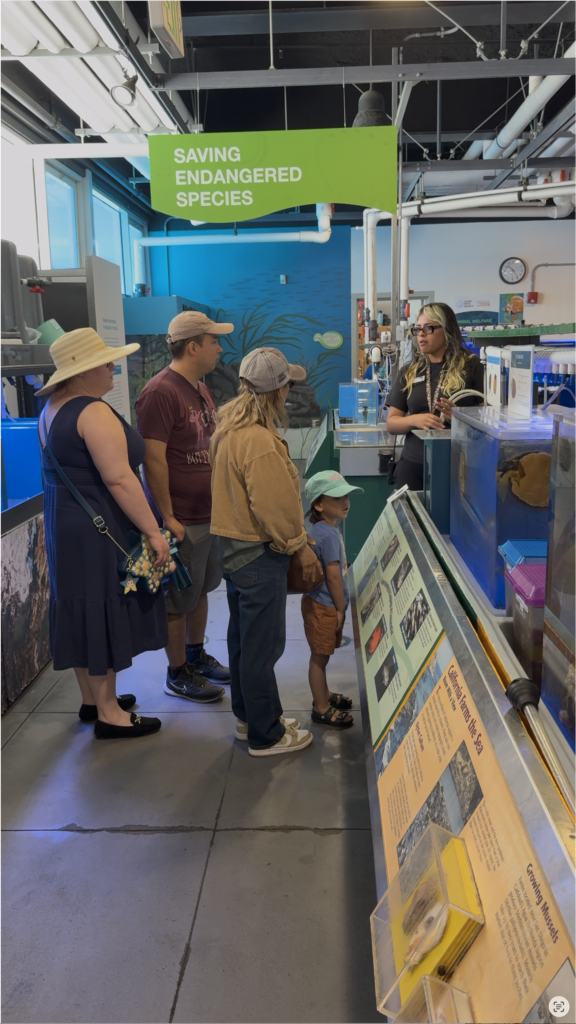
Some of the museum’s sea creatures were moved temporarily to other institutions while the modernization program was being built; they are back now, and thriving in that great new seawater. The aquarium’s teaching mission never stopped during the renovation, with museum staff conveying to students and the general public the important lessons of conservation. “It’s the best teaching aquarium in the world,” said Chief Aquarist Landesman.
The aquarium’s famous exterior by the famed late LA architect Frank Gehry was not addressed in this renovation.
There is more to do eventually, but this celebration of the aquarium’s 90th anniversary has put the facility leading the world in many ways. Cabrillo is ready for the future.
The Club thanks Chanthell Nelson, Martha Vaca Perez, Rose Watson and Crislyn McKerron for their invitation and welcome.

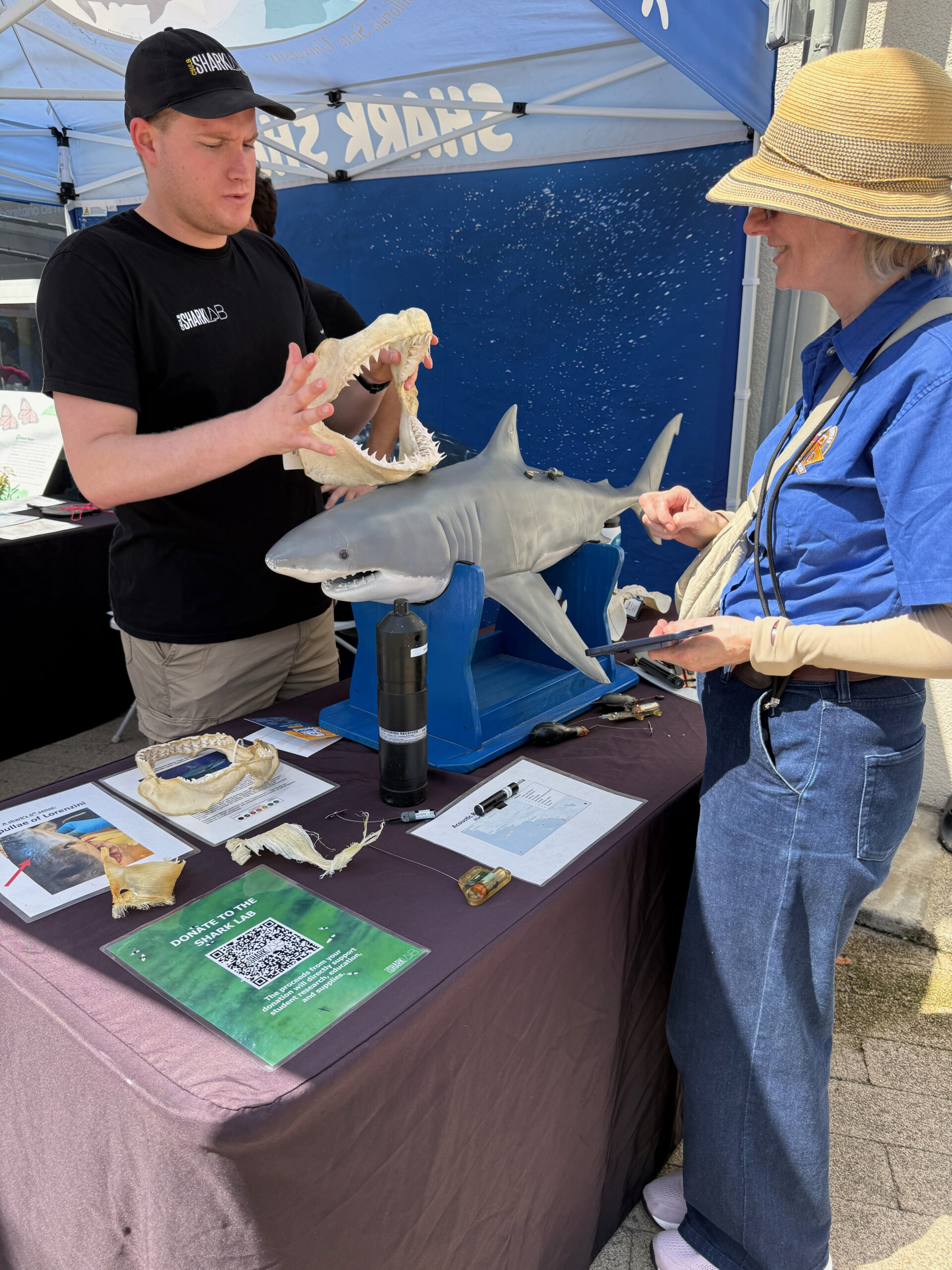
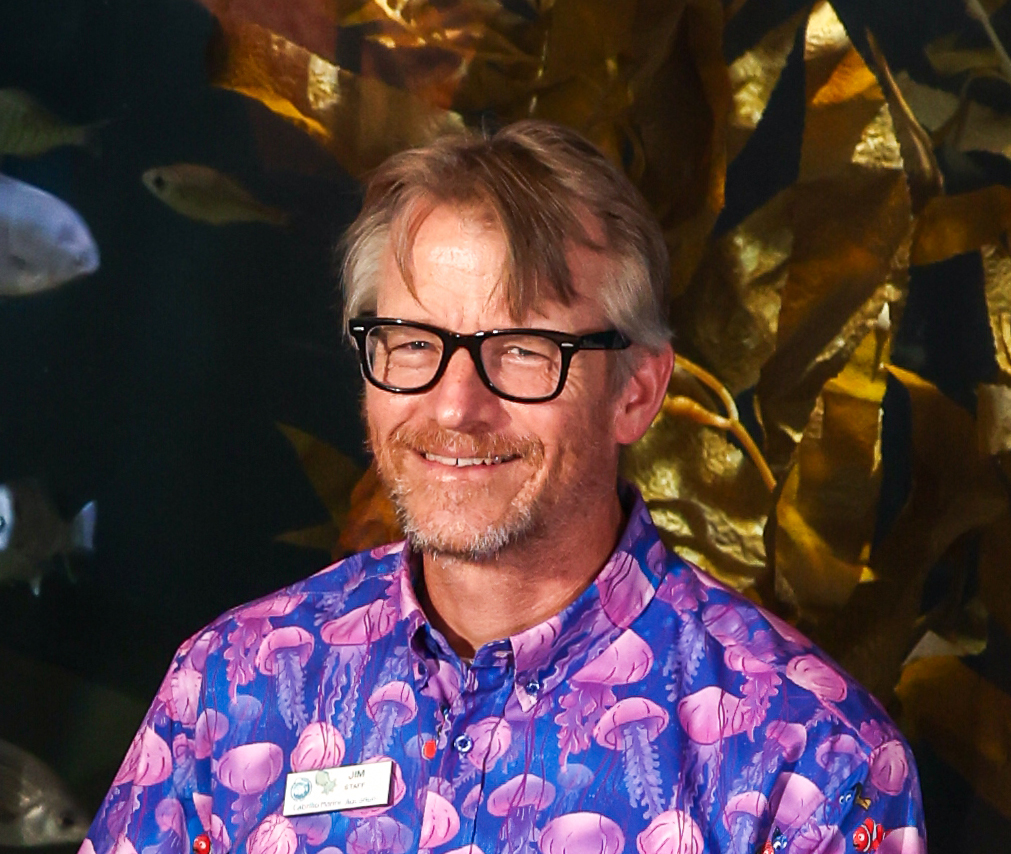
On July 1, Club CEO Robert Larios and Alive! editor John Burnes interviewed members of the administration team at Cabrillo Marine Aquarium directly involved in its $8 million renovation. They are: Crislyn McKerron, Executive Director, 26 years of City service, Club Member; Jeff Landesman, Chief Aquarist, 43 years, set to retire in July; Jim DePompei, Programs Director, 22 years, Club Member; and Martha Vaca Perez, Administration Director, 27 years, Club Member. The interview took place via Zoom.
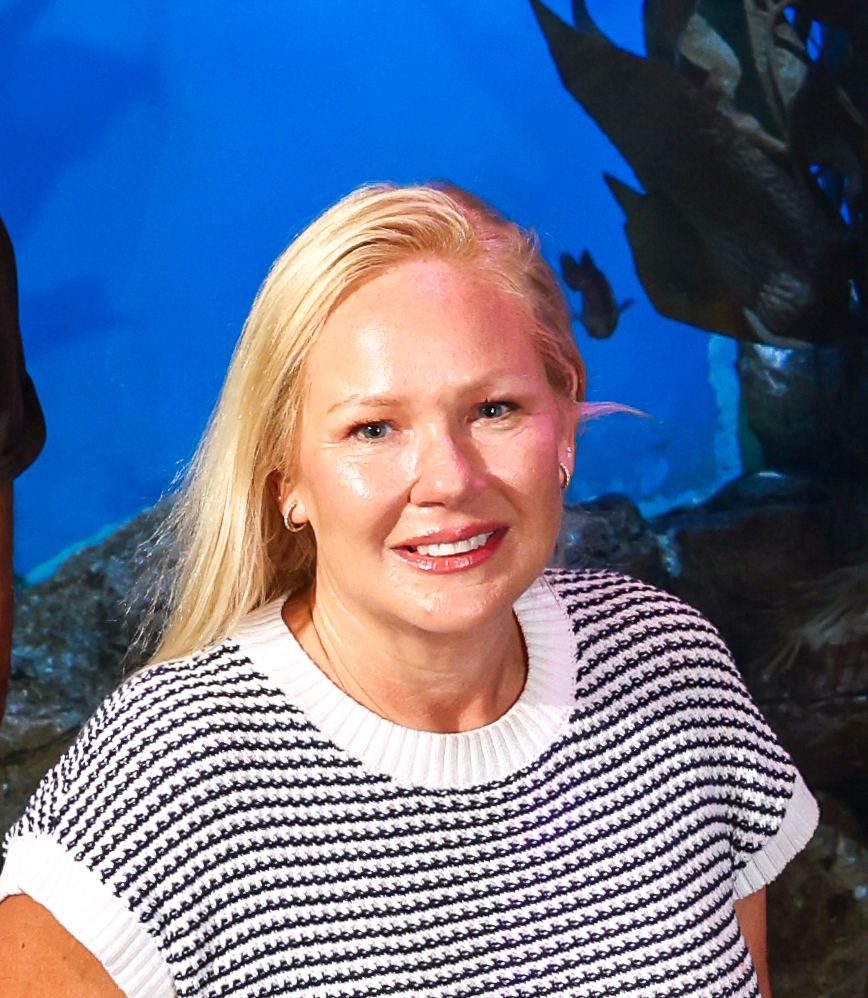
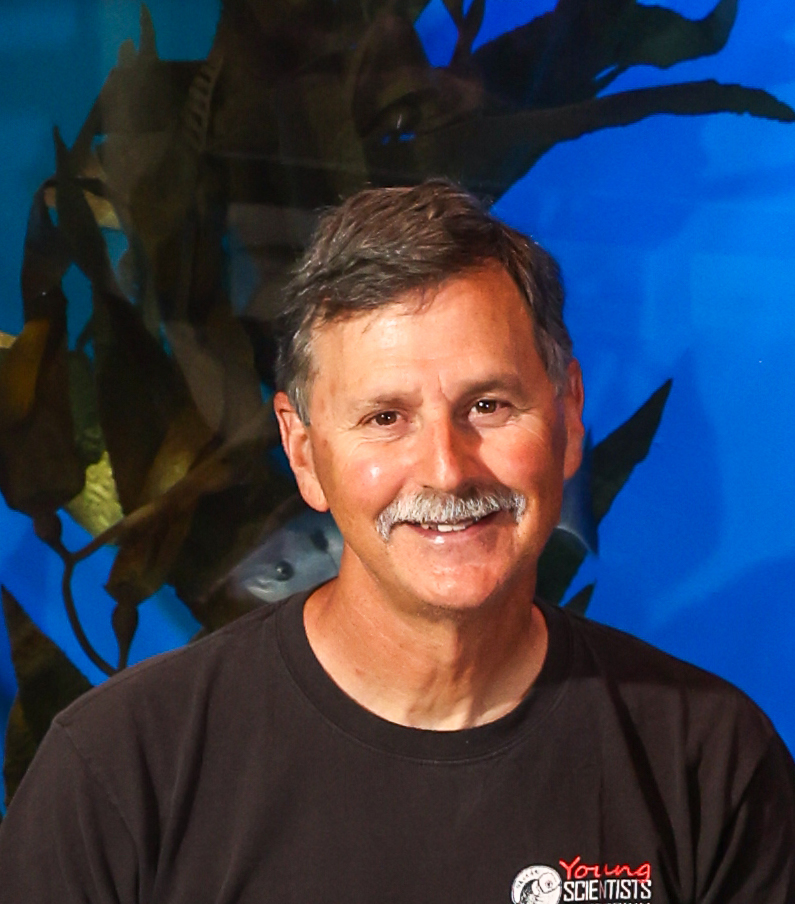
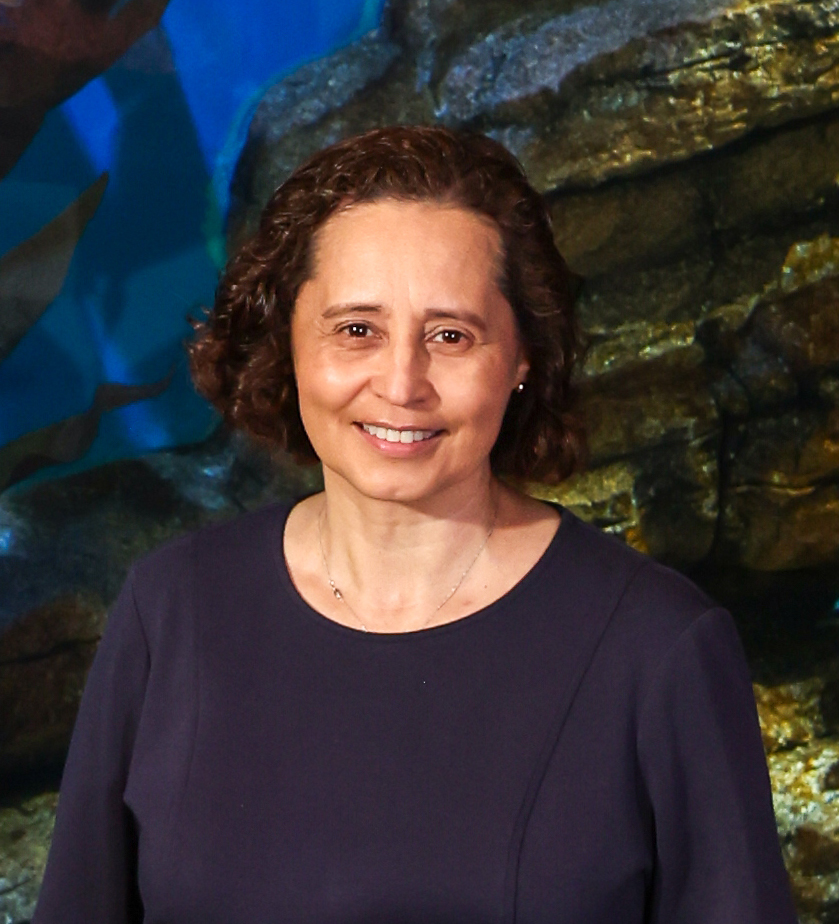
Thanks for joining us today. First, how did you get to your current position?
Crislyn: Good to be here. I always wanted to be involved in the zoo and aquarium world. I was an Intern in the research department at the Los Angeles Zoo out of college. I took a City exam because I wanted to be able to do my research work as well as work for the City in the same place. But the City career took me in a different direction, and I ended up with most of my career being at LAX in Airports. I left there as Assistant Airport Manager when the opportunity came up for the aquarium. That was about six years ago, and I jumped at that opportunity. In fact, I had been advocating to get the opportunity for a while. I loved the Aquarium. I wanted to complete my career here, and I have an innate passion for both animal welfare and the future of this industry, and the way it’s evolved. It used to be a menagerie of animals, and now it’s a place of legitimate conservation and modeling animal welfare. The way the industry has changed is really appealing to me. That’s why I ended up here, and I’m not going anywhere.
It’s really changed and grown in six years.
Crislyn McKerron: Our team has done an amazing job.
Jeff Landesman: I was in the right place at the right time. I was going to grad school at Cal State Long Beach back in 1981 or maybe a little bit before. The first Chief Aquarist, Bob Johnson, was hired from the lab where I was working. He needed to fill out his staff, and he asked me if I wanted to be a part-time Aquarist. I was excited. I didn’t know how to spell it, but I was excited to be an Aquarist. It was that simple. They have not fired me yet.
Martha Vaca Perez: I have been with the City for 26 years. I started off at Public Works, and I was there for a very long time. I moved over to Personnel, and then I was at Los Angeles World Airports (LAWA). A lot of the work I did was front facing, working with the public. At one point I started working behind the scenes, doing HR, timekeeping, and supporting staff. I had the opportunity to meet with Crislyn at the end of my career at LAWA, which brought me here to the Aquarium. The best part was I remember coming to the Aquarium in kindergarten and it was my first experience at the beach. And now as a staff member I help facilitate other children have that same experience. I’ve been here since COVID. Working through COVID was difficult for all of us, but we got through it. I plan to retire from here when the time comes. It’s incredible being here and working with staff, public, and our animals. How can you have a bad day when you’re here?
Jim DePompei: I started off as a teacher with the Los Angeles Unified School District, teaching third and fifth grades. I did that for four years. At that point, I was an Adjunct Professor at National University for education and technology. I did that for a while. I was looking for things to do and I love the ocean, and I saw that the Cabrillo Marine Aquarium had a job opening for an educator. I said, “Hey, why not give it a try?” And I did. I landed a job here as a full-time educator back in 2004 and haven’t left since.
I was with the onsite education team doing public-facing programming, school-based programming, doing curricula and things like that because of my background as a teacher. After years of doing that, I became an Education Curator in charge of the onsite programs. From there, when the Programs Director retired, I applied for this position and I became Programs Director. So now I run all of the different public and school-based programming here at the Aquarium. I get to work with an amazing team.
Seawater Life Support
Tell us about the renovation project, its elements, and what it allows Cabrillo to do.
Crislyn: The biggest component of the renovation was our life support system, which came in at about $7.6 million. We have an incredible life support system expert, Jeff Landesman, on this call!
Jeff: We are so happy to have that system. It is considered state-of-the-art. A number of other aquariums have passed through, and they open their eyes and drop their jaws. They can’t believe just how state-of-the-art it is.
Tell us more.
Jeff: It starts with the building that houses the system. The building is constructed of materials that will not rust. That’s important because it’s around seawater. There is fiberglass-reinforced plastic, there’s fiberglass, there’s PVC, and when we do need strength, it’s all 316 stainless steel. We should be able to come back in 20, 30 or 40 years, and that building should look exactly as it looks today. We are thrilled just with the construction of the building itself.
The life support equipment inside the building also is state-of-the-art. We worked very, very closely with the engineers at TGP Engineering. We built redundancy into this system, because under no circumstances can the animals be without clean, flowing seawater. That has to be the priority. For instance, circulation pumps keep the water moving to the tanks. If one of those pumps happens to not function, there is a spare sitting right next to it. All we have to do is open one valve, close one valve, and that pump now becomes a circulation pump. No matter what time of the day or night, if something happens, we have a spare pump sitting right there. It’s like driving with five wheels. If you have a flat tire, you just kick in that extra tire. In any sort of emergency, the fish won’t know the difference.
We have two huge sand filters that clean the water down to about 20 microns. Again, if one of them happens to spring a leak, which rarely happens, we have two. We have redundancy. Fish will not know the difference. The water then goes through an ultraviolet sterilizer, which kills pathogens and parasites so that the fish are always getting very clean water all the time.
The final stage is to chill that water down. Southern California has cold water. A lot of people think it’s almost tropical, but it’s not. It’s cold. That water has to be chilled down to about 57 degrees. We have two chillers. If one happens to not work, the other one is right there to start up automatically.
We have five stages of filtration. There’s no way that the fish will ever be in peril, and that was the priority for us in working with the engineering company to make sure the fish get clean, cold water, and that there’s redundancy every step of the way. It’s fantastic.
Is the water piped in from the sea, or is it brought in through other means and then entered into the system?
Jeff: We’re lucky because we’re right next to the Pacific Ocean. We have a well that goes down into the sand right on the outside beach, an A-rated clean beach. We have a pump inside that well, and we can turn that pump on and get water that’s been trickling down through 20 feet of sand. It’s clean water. It’s very filtered. We fill up our holding tanks with that water, and we filter and aerate that water. We have makeup water that we use when we have to dump some of the old seawater. Just like in a fish tank, you have to do water changes. We do probably 20 percent a week, which is very high, but we have free water, so we’re very happy to do that.
Is all of this apparatus behind the scenes?
Jeff: It’s all pretty much behind the scenes. The public can’t see it unless we take them back to take a look at it. There are extensive alarm systems set up inside the pump house. There are probably 50 different sensors sensing everything from water quality to temperature to flow to when the pump is on. Anytime any one of these parameters goes out of our accepted range, we get paged immediately. We can log in from home to see what the problem is. We all live very close. We can drive right in and fix it. It doesn’t take long for us to make sure things are working properly.
What a huge pledge to the future.
Jeff: I agree that the fish are getting the best water possible from any aquarium in the world. And there’s also expansion. We’ve built in the capacity to expand in the future if we want to get some bigger tanks.
More Features
How long has the life support system been a priority?
Crislyn: For a very long time, but it was a complex project to get off the ground and an expensive project as well. We started the actual planning a little more than three years ago.
Jeff: Yes, it’s been a while.
Crislyn: Our team was heavily involved in the design, and they insisted upon all the different factors that Jeff mentioned because they are truly the experts in animal care.
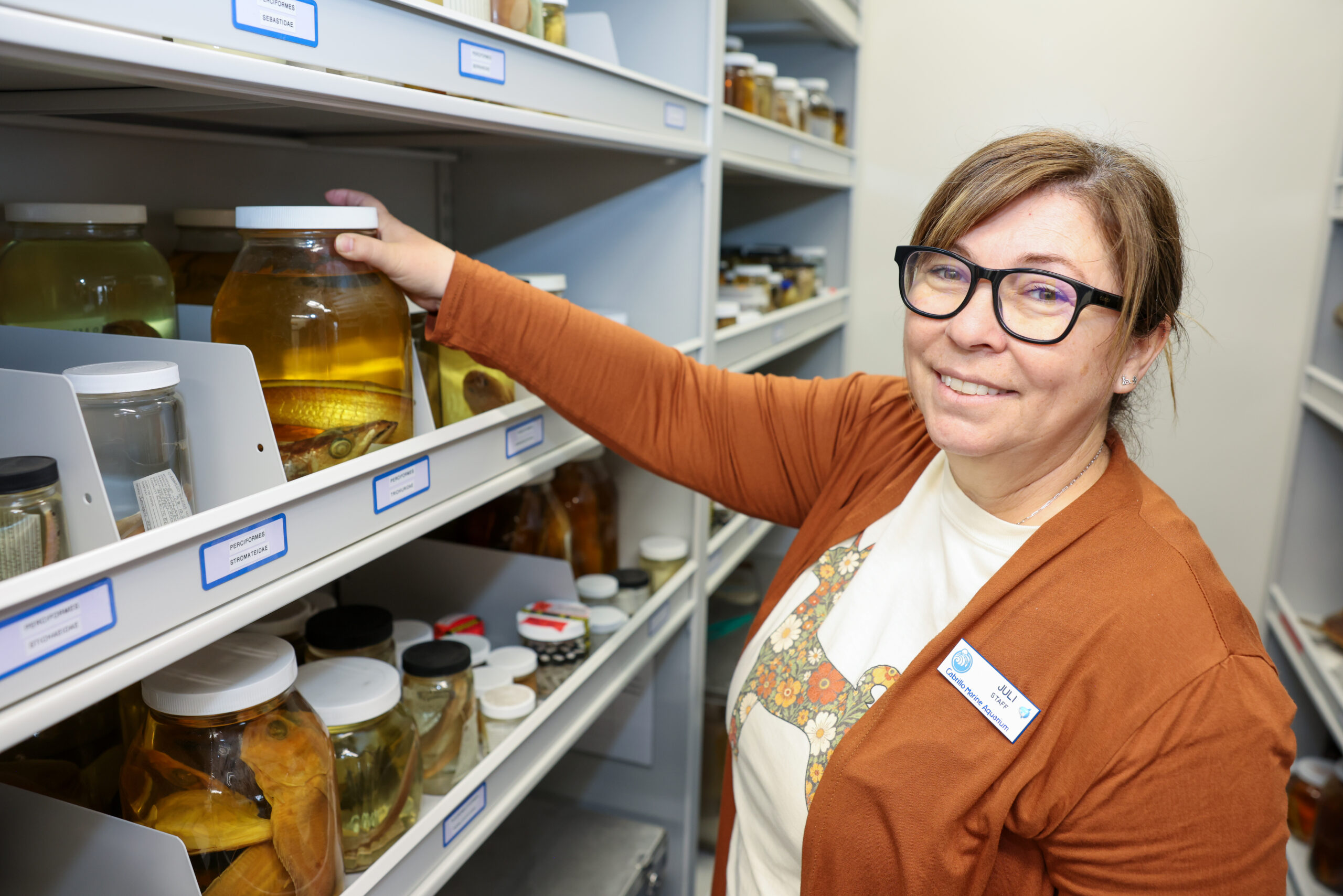
In addition to the life support system, we wanted to make sure there were new things for the public to experience when we reopened. That’s where a new public space called the Collections Room came into play. We have a very notable natural history-style collection of artifacts and specimens that was always kept behind the scenes. We used this opportunity to create a new Collections Room with a public interface, a public counter, with the ability to do programs and tours within that room to show off our collection.
Then we also built a new Jelly Lab for both public interaction as well as to increase the ability for us to do our jellyfish production. We’re known for that. It also has a public counter where we can show people working behind the scenes. In the spirit of who we are, we give a peek behind the scenes of how an aquarium works. That concept has been part of the aquarium since the very beginning.
We also did a new introduction entry exhibit when you walk in, a wayfinding and orientation display, for people to understand that when you go through our main Exhibit Hall, you’re traversing through the various ecosystems of Southern California.
Another new exhibit also highlights our signature program, our grunion run.
Those are our forward-facing features for the public in addition to the life support system, so people could see something tangible to relate to the renovation.
Other Elements
Jim: The Exhibits Team did a great job of switching out some of our labeling and signage so that it’s bilingual. Now we have both Spanish and English labeling in the aquarium where before it was only in English. That makes a huge difference for impact on our community. I’m very excited about that part of the renovation as well.
Crislyn: Excellent point, Jim. We don’t display anything new that isn’t bilingual. That applies to videos, the audio tours, and everything that we do.
Martha: We had the choice of closing down the aquarium during the renovation system because the main exhibit hall would be closed. Collectively everyone agreed we could not close and made the necessary changes to stay open from the programs team redoing the tours to working behind the scenes trying to be as quiet as possible during construction when the public was here. Everyone made the changes necessary to keep open and keep going as much as we could during the 18 months of construction.
Crislyn: Yes, a big shout out to our programs team. Making an experience meaningful for our guests took a lot of hands-on interaction and a lot of hands-on work from that team. When two-thirds of our facility was closed, they did an excellent job interacting, creating other opportunities, taking the kids out to the coastal park to experience nature firsthand, and utilizing the remaining space that remained open.
Right. You have a deep mission of education that would be affected if you closed.
Crislyn: We do. It’s important to note that we feature free admission. We work hard to remove any barriers to anyone coming to the aquarium, whether you’re the general public or a Title I school that may not even have the funds for a bus. We work to help overcome those situations as well. Our Friends group does an excellent job at fundraising for buses, and we do our best to provide scholarships to the greatest extent possible every year so that kids can come to the aquarium. Being closed would have meant we would have missed out on at least one full year of providing this opportunity for school children of Los Angeles. That wasn’t acceptable to any of us.
Jeff: No. Not acceptable.
90 Years and Beyond
The reopening celebrated your 90th anniversary. What’s the future vision?
Crislyn: We’ve gone through a lot of changes in the last handful of years in updating the facility, and that’s certainly got to continue. We have a lot more work to do in the main Exhibit Hall. Also, in recent years, we’ve been ramping up our contribution to conservation programs. I can see that only growing. That’s important to all of us.
We have a history of giving back to the community and the environment through our coastal restoration programs and through beach cleanups and education. But we’re deeply involved now in helping with the reproduction of some critically endangered species. We’re definitely hoping to expand that program.
Martha: The 90th anniversary is a huge milestone, but we’re continuing to move forward. We’re constantly evolving and changing the way we present our programming to work with the community, like we’ve done with our bilingual signage. Another focus is conservation.
The way we connect with the public, including social media posts, is evolving. Social media was once used to inform the public of our events and now it’s a balance of information and conservation. Our post may be fun and silly but our message of conservation is there. It’s a constant evolution without losing the main message of being available to everyone and helping them connect with the ocean and with the ocean animals. It’s our responsibility to care for them.
Jeff: The tanks we have in the aquarium are unique because you can walk around all four sides instead of seeing sort of a picture window view. And we’re getting more immersive. As we redo all these exhibits, we want to put people into the habitat. Just enjoying the animals is one thing, but knowing where they come from and how they live and what they eat is all going to be added to this immersive experience of walking through the Exhibit Hall.
Crislyn: Absolutely.
Jim: Just because we’re 90 doesn’t mean we’re slowing down. We’ve been here, we’ve done a lot of really great things, but there’s always room for new things and new experiences for our guests, new experiences for programming and for the animals. When someone says, “Wow, 90 years,” it means we’ve been doing something right for 90 years, and we’re going to continue. It’s going to be a fun challenge for us to constantly evolve how we interact with our guests in the most current way, and also to make sure that our animals have the best care possible. With this new life support system, it’s exciting that we can go many years into the future now with the best animal care.
John Olguin and The Cabrillo Way
What is new about today that the founders could not have envisioned? And what remains of the original mission?
Jim: This is what remains: We call it the Cabrillo Way. It’s how we engage with our visitors, what types of experiences we offer to our community, and how we get our community involved.
Way back at the start of the Aquarium, we were a museum; that’s where our museum collection started, and that’s where it comes from. We were a resource for educators and for the community to come and look at some really cool stuff. Then we added in a former Lifeguard, John Olguin, who loved the beach, and he started these ways of engaging people. That’s where the Cabrillo Way started. We had this museum collection of cool stuff that mixed with this individual who loved the ocean and was able to engage the community with these specimens.
He had the brainstorm of, “Hey, let’s take people out to see the grunion. Let’s put people on boats to see whales. Let’s take people out to the tide pools. Let’s add in some living organisms in here.” How he interacted with people was very engaging, where kids became a sea star or a whale or things like that. We continue to teach in that way, in the Cabrillo Way. That’s something we hold true to who we are as an institution.
Jeff: Some years ago, we were part of a group that went to the International Aquarium Congress in Japan. We were part of a group of maybe 400 delegates from aquariums all around the world. It was quite a sight to see. And then one of the directors from the Vancouver Aquarium, Murray Newman, stood up in front of this huge group of people and announced that Cabrillo Marine Aquarium was the best teaching aquarium in the world. I don’t know if our founders would have recognized that back in the late ’70s or early ’80s. We are a modest-sized aquarium and not a SeaWorld or a Monterey Aquarium, yet having such an international impact is not something they would have recognized. But we’re all really proud of it.
What a moment that must have been, others recognizing all the effort the aquarium has been doing for a long time.
Jeff: It’s a reflection of the programs that Jim was talking about because they are not only educational, they’re fun. People learn that way. They walk out of here still dancing like a grunion or a jellyfish. It’s educational and fun unlike any other place.
Martha: We continue to have that connection with the public and the students. But at the same time, technology has evolved, and we’ve been able to adapt to it. Some of our exhibits have screens, sound and other digital media. We are keeping up with technology, but the connection with the public is still there just as the founders originally envisioned.
Jim: The aquarium is a good representation of things that you can see along the coast of Southern California. We have beautiful jewel tanks that focus in on animals that people don’t know are animals. We present that fun experience of learning about these things.
And then we explore all the habitats within walking distance of the aquarium. We run programs that take people, starting at the aquarium, to the tidepools to see the animals in their natural habitat. We take them to the sandy beach and dig for sand crabs. We take them out to the mudflats to look at the birds, what they’re feeding on and things like that. That connection includes the environment as well.
Crislyn: I’m a member of our accrediting body, the Association of Zoos and Aquariums. I get to travel to see other aquariums frequently, as I’m an accreditation inspector myself. I get to see these incredible, stunning, beautiful aquariums across the country, sometimes even internationally. But nobody is even remotely like us. Not even remotely. All the things that Jim and Jeff and Martha are talking about are unique thanks to our founders. They’re not going anywhere because that is our stamp. I constantly get feedback like, “I love your aquarium.” People approach me all over the place just to gush about how amazing and unique their experience was at our aquarium. No matter how much technology comes along, we will be staying true to those principles.
Education Programs
Your teaching mission seems to be more important than ever as it stands.
Jim: Conservation is critical. It’s about our connection to the environment as human beings. We’re everywhere, and we have a massive impact on the environment. It’s about what we can do as individuals and as a community to help mitigate what’s happening with the environment and to make good choices. Conservation starts with learning about the environment and learning about the animals and what the animals need. Touching a sea urchin for the first time, that’s a big deal for first- and second-graders. Getting a little hug from a sea urchin or finding out a sea anemone is sticky, that’s really cool. Or seeing a shark swim underwater and being awed by that, right? All of that is the foundation of conservation, is that understanding.
And then it’s what you can do as an individual. We tell the youngest students that they can have an impact on their immediate family by the choices they want them to make. We see thousands of school children every year – they come down with their class for three hours and do an intensive marine biology search, or they might come down and have a shorter tour or maybe participate in our spring outdoor classroom and go through multiple stations about animals. There are lots of different ways we can engage those students.
That’s so important.
Jim: Yes. Then we also have our Young Scientists program, which is a little more in-depth. That’s where the students come down for nine months and do a research project, which they choose. They learn about the scientific method. They learn about how to collect data. They learn about how to crunch the numbers in their data once they have it. And they learn that science is not perfect; the whole idea of science is that you’re trying to figure out the answer to a question, and it might be the answer you’re looking for, or it might not be the answer you’re looking for, but it’s still an answer. And then we have our staff-led programs, which we work with other organizations on, like our abalone research, where we’re spawning and growing white abalone in the aquatic nursery to be re-released into the wild. The students go through different research to make sure that the abalone are healthy.
We take them out to the beach, too. Oftentimes we have these programs where we study the beach environment. We get a whole bunch of kids who have never been to the beach before. Studying the beach environment is an eye-opening experience for them – they are excited to come back with their families and learn more or just have fun at the beach as well. If you find an environment enjoyable, you’re going to want to protect it.
How is technology changing programming?
Jim: It is adding to our programming. We continue to do all the hands-on experiential outdoor programs as much as we can. But technology gives people who might not have the ability to access those particular environments a chance to be immersive in those environments. Virtual education gives an opportunity for students to learn about the animals via a one-on-one connection with a staff member, an educator. This type of technology has really opened the doors for experiential learning for students.
Martha: During COVID, Jim and the programs team redid their programs to be able to connect with the children who would not be able to come to the Aquarium. Our programs team kept going. They were constantly doing Zoom meetings with students continuing with our message.
Crislyn: Accessibility is important. Our website can be translated into just about any language. You can adjust the contrast for any kind of visual challenges. There are a lot of different ways we can be open to the world.
City Run
Cabrillo Marine Aquarium is one of the few that’s owned and run by a city. What are the benefits and challenges of that?
Crislyn: It’s been predominantly a benefit. We are fortunate enough in that we have a partnership with a group called the Friends of Cabrillo Marine Aquarium. As a nonprofit, it raises funds for us in different spheres that the City could not access. Between the two, we have access to different funding sources. We are funded almost completely by the Port of Los Angeles, which has been an incredible benefactor to the Aquarium. They’re very supportive. We are part of Rec and Parks formally, but funding is provided from the Port of Los Angeles, which provides a steady revenue stream. Thanks to the Port, we were able to sustain operations, whereas a lot of other aquariums let go about 50 percent of their staff during COVID. They got hit really hard; we did not. We were afforded the opportunity to convert our programs to virtual, to continue our interactions and continue being a resource to the community because of that support.
I don’t see a lot of challenges. We’re provided a lot of resources and fiscal stability.
Jeff: One of the other advantages we have being part of the City is this: About 20 years ago, we doubled our size, which also doubled our maintenance. We are so fortunate to have a group of talented tradesmen who we can call upon – electricians, carpenters, AC mechanics, plumbers, all sorts of people who at a moment’s notice help us out when we have an issue. If we need to pour concrete or put some new piping in, they’re always there, and their skills are unmatched. We’re fortunate to have them.
Crislyn: It’s that support from the Port of Los Angeles that allows us to remain a free admission aquarium. That’s key to who we are. In fact, we’re the only free admission accredited aquarium in the country. Our business model isn’t about how to make sustaining revenue, it’s about how to give back to the community, and that’s due to our Port funding.
Jim: It allows us to keep our programming free. We offer free tours and the free spring outdoor classroom. The Friends is able to find grants for scholarships for buses. So effectively, a teacher can apply for a scholarship for a bus and come on a free field trip. It’s not charged through the aquarium. They get a free day at Cabrillo Marine Aquarium going through a program and being able to go to the beach afterwards if they want. In my world, that’s fantastic. That offers so much more accessibility.
Martha: Some people might see our City ownership as a challenge. Yes, City processes may take a little longer than we want, but in reality, they help us with those policies and procedures in place that help us move forward. Rec and Parks helps us out. We can reach out with questions to the Zoo for assistance. We have the whole City to help us out with any issues we run into. It’s more of an opportunity, a resource, than anything else. We’re not all alone having to figure things out.
Favorite Places
What’s your favorite part of the aquarium? Where do you go when you have an hour?
Martha: Oh my gosh. When the main Exhibit Hall was closed during the renovation, we had a temporary touch tank where we had our sharks. I’d put my hands in the water to touch and play with the sharks. Because the water is so cold, the staff challenged me to see how long I could keep my hand in the water playing with the sharks. So to me, my favorite time is being with our animals.
But more than that is opening my window and hearing the kids in the courtyard when they’re here. We have our spring outdoor classroom when we have 800 kids here daily for 12 weeks. When we open up our doors, we have to control the crowds. But being out there with them as they light up is just amazing. I like asking them, “What did you enjoy today?” and you see their faces light up. That’s the most exciting.
Jeff: This Aquarium is in an absolutely perfect location. They couldn’t have plopped an aquarium in a better spot. We take kids for a short walk around the corner to the tidepools. Or they can go to the outside beach and sift for sand crabs or do a beach seine on the inner beach. Or they can get out to the mud flats and see herons and mud flat animals. We have every habitat steps away from here. So if I want to get away and clear my head, I walk in the coastal park and take a slow walk out to the fishing pier to watch the dolphins and pelicans. To be here is incredible. Some staff during their lunch times go swimming and spearfishing. Being in this location is great for the kids and the public, but it’s also great for the staff.
Jim: One of the biggest draws for me in applying for a position here was to work outside, and I got that. I’m very fortunate.
I have two favorite places. Place number one is the tidepools. If it’s a good low tide and I have an hour, I will walk out to the tidepools. It’s a way to reconnect yourself to nature and to know why you’re doing what you’re doing. This was the impetus for me to become a marine educator with my love of going to the beach and to the tide pools. It reenergizes me to speak to the next guest.
The other spot that I love is the Exploration Center, because I love to explore. We have a naturalist corner with specimens and a microscope set up. We change the focus every month. We have a staff member who’s an amazing artist, and she creates a small deep-sea den or a grunion run den. It’s always fun to go down and see what new art pieces are in there for people to enjoy. She usually has something for you to build and to add to it as well. That’s my go-to spot to re-energize with why I do what I do.
Crislyn: My office is right next to Martha’s, and it’s hard to not feel that uplift when you hear the giggles and the laughter and the joy of 800 kids right outside. It’s very overwhelming in a wonderful way to experience that. And the tidepools are an incredible, peaceful, beautiful place to visit.
But one thing that I like to do that hasn’t been mentioned is walking around and seeing the animals that we have behind the scenes. It’s fun to see the animals that we’re either caring for medically or we’re observing to make sure that they are healthy so we can introduce them to the general population. Our team is dedicated to the welfare and health of the animals in our collection, and seeing an animal heal is incredibly uplifting to me. Or seeing an animal being prepared to come be part of its new home in our exhibit hall or elsewhere at the aquarium is also uplifting.
A Passion for Giving Back
What do you love about what you do?
Crislyn: I love that we give back. Literally every morning, I think of my job as a place where we give back to children, to the community, to ecosystems and the environment, and to animals and their conservation and wellbeing. There’s nothing about our aquarium that isn’t built around the spirit of giving back. It’s really hard not to feel a really intense and innate joy at getting to be part of that.
Martha: We’re public servants. I was taught when I first started with the City that if you can go out of your way to help someone and make their day better, then you had a good day. Here, I can definitely do that especially with staff. If every single day I can help a staff member get through something or make their job easier, then that made my day.
Jim: This is a hard question because there’s a lot. It’s probably the laughter, the wows, the amazing, those types of things that I hear either students or families or people saying as they’re wandering through the aquarium or participating in our programs. That lets me know, without any kind of other data, that we’re doing something right and people are enjoying what they’re experiencing here at the aquarium. I love that excitement.
And finally, Jeff, you’re retiring in a few weeks after an amazing 43 years of City service. Maybe this will be the last, most profound answer you’ve ever given, not to put any pressure on you. But what do you love about what you do, or did, over the many years?
Jeff: I don’t think anything I say could be profound. I thought about this. The part I love most is getting up and going to work. Working alongside these people is amazing. The staff here is incredibly supportive every step of the way. I’ve had jobs where you didn’t want to go to work. You wake up and you get in the car and you say, “Oh, geez, I don’t want to do this.” The day drags on, you don’t like the people you’re with, whatever it is. But I couldn’t have done this for all this time unless the folks around me were fun to work with and absolutely supportive. I can’t imagine the number of times I messed up, but nobody ever said it in that way. It’s always been, “What can we do to help? How can we be better? How can we work as a team?” It’s an amazing group of people here that’s hard to describe.
But on a more tangible note, the thing I also love is building things and walking out and seeing people enjoy it. To see people staring at something that our team put together, or just watching the enjoyment of the kids, that’s what it’s about.
Martha: Jeff is the heart and soul of Cabrillo Marine Aquarium. Him retiring will have a huge impact, not just on the Aquarium staff, but on all the people he met every day. A lot of us are struggling with it.
To Jeff especially, but to all of you, thank you for your service to the City and the community. And thanks for taking the time to speak to us today.
Jeff: Thank you. You too.
Martha: Thank you.
Crislyn: Thank you. Have a wonderful day.
Jim: Thank you.